
Specify Seamless Steel Pipe Profiles for Ag & Auto Parts
Specify Seamless Steel Pipe Profiles for Ag & Auto Parts
Specifying a seamless steel pipe profile for an agricultural or automotive part is a joint decision before it is a material decision. The cross-section has to match the feature that does the work — the bore, the wrench, the shaft, or the yoke — and only after that do outer diameter, wall thickness, grade and tolerance become meaningful numbers.
Fakesi, the brand of Wuxi Jiangbo Intelligent Technology Co., Ltd., supplies a Q355B profile range organised around that order of decisions: cold drawn round tube plus seven shaped sections — external hexagonal internal round tube, external round internal hexagonal tube, lemon-shaped tube, triangle pipe, ST star pipe, 10ST star pipe and square rectangular pipe — with a drawing-based custom special shaped pipe route behind them. Across this range the catalogued dimensional limits are outer diameter 1–100 mm, wall thickness 1–20 mm and a tolerance of ±0.1 mm.
What follows is the six-lock sequence an engineer or buyer can apply before an RFQ leaves the building, followed by four written-out specification lines and the failure points that most often separate a drawing, a quotation and a delivered part.
1. The six locks, in order
A profile specification is a chain of six decisions, and each one narrows the next. Skipping a link is what produces a quotation that reads correctly and a part that does not fit.
| # | Lock | Decision it settles | Output that goes on the RFQ |
|---|---|---|---|
| 1 | Part function | Fluid path, pressure boundary, machined location or torque transfer | The admissible profile family |
| 2 | Section geometry | Whether the mating part has the same form | Profile name plus the surface that engages |
| 3 | Grade | Material line and any application standard | Q355B or another listed grade, stated separately from the standard |
| 4 | Size | Fit in the assembly and the bore left inside it | Outer diameter 1–100 mm, wall thickness 1–20 mm |
| 5 | Tolerance | Which feature the ±0.1 mm band governs | Nominal value, band, controlled feature |
| 6 | Acceptance | How the order is released and covered | Test method, quality system, warranty, support |
2. Lock 1 — Which function is the tube performing?
Four functions dominate this range, and naming the function first removes most of the catalogue before any size is discussed.
- Hydraulic fluid lines. The tube is a conduit. The bore carries the flow and the outside diameter locates the line at clamps and fittings. The catalogue describes cold drawn round tube as hydraulic fluid line tubing and as CDS steel pipe with tight tolerances.
- Hydraulic cylinders. The tube becomes a barrel or a rod element, so the internal surface and the wall carry the duty. The same cold drawn round tube line is catalogued as tube for hydraulic cylinders.
- Precision components. The tube is machined, and the value of the incoming tube is how close it sits to finished size. The documented Italian drive shaft case records reduced secondary machining costs due to high-precision tolerances as one result of the supply.
- Drive shafts. Torque crosses the joint through a non-circular section. The application record describes drive shaft tube on a factory line performing power take-off, universal joint drive and torque output, running 24/7, mated to a universal joint yoke, cross and bearing kit and slip yoke, with high torque resistance to deformation as the special requirement.
The dividing line is which surface does the work. For the first three functions the outside diameter is mainly a locating dimension and the bore is the working surface. For the fourth, the outer form is the working surface and the bore may be irrelevant. That single distinction decides whether a round profile can be considered at all, and it is the reason a drive shaft drawing cannot be satisfied by a better round tube.
3. Lock 2 — Does the mating part have the same section?
A shaped profile is a coupling, not a cosmetic choice. It is usable only if the yoke, hub, socket or block it engages has the same form, so the second lock is a comparison between the drawing and the catalogue, not a preference.
| Catalogue profile | Model designation | Section it presents | Mating feature to confirm |
|---|---|---|---|
| Cold drawn round tube | 12–100 | Circular outside and inside | Bore, clamp diameter, sealing or sliding surface |
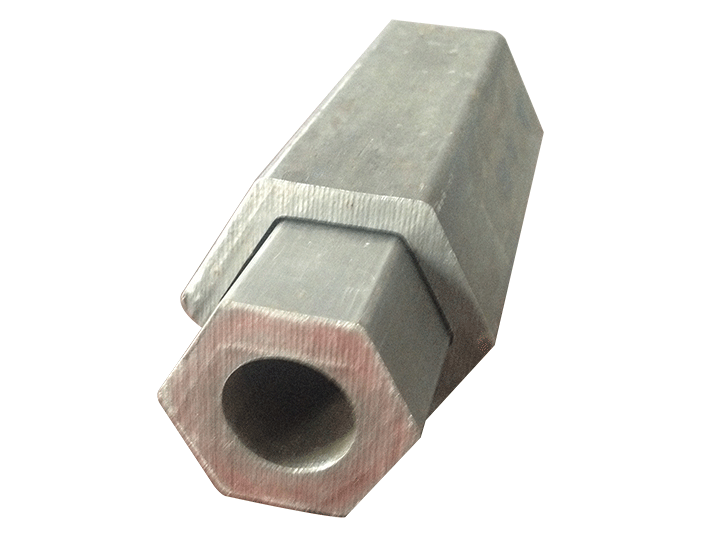
| External hexagonal internal round tube | 11–100 | Hexagon outside, round bore | Hex socket or wrench on the outside; round shaft or fluid path inside |
| External round internal hexagonal tube | 10–100 | Round outside, hexagonal bore | Hex shaft inside; round seat or bearing outside |
| Lemon-shaped tube | 8–100 | Lemon section, inside and outside | Yoke or socket cut to the same lemon section |
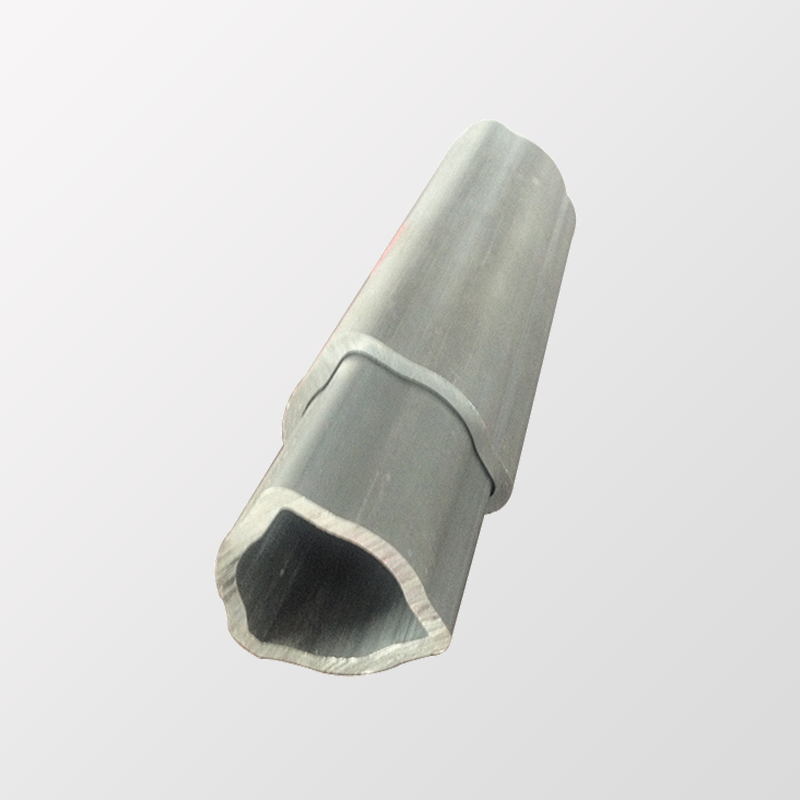
| Triangle pipe | 4–100 | Triangular section | Triangular socket or hub, dimensioned from the same drawing |
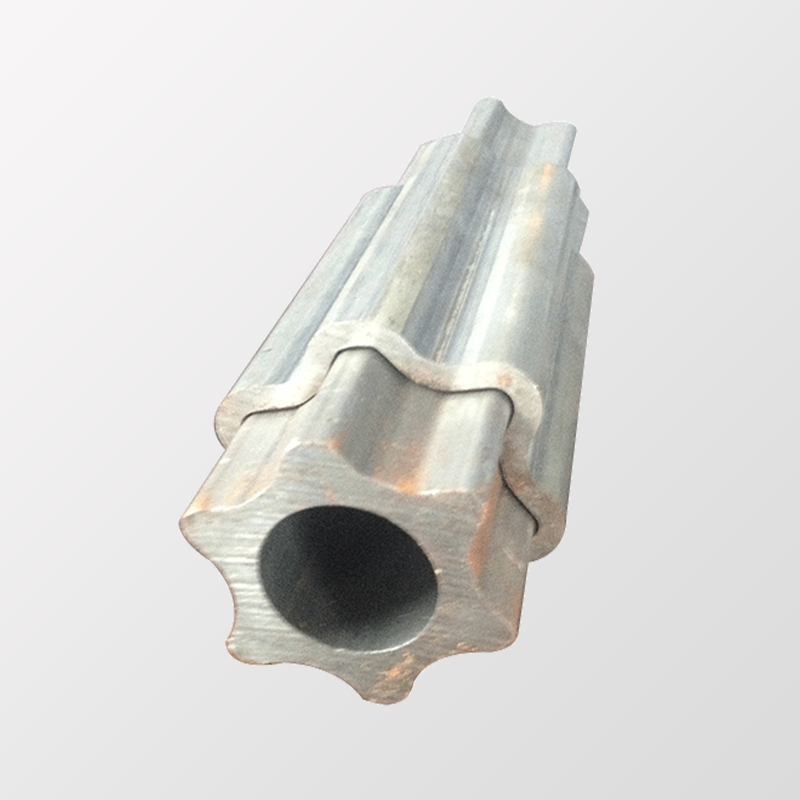
| ST star pipe | 5–100 | Star section, catalogued in 6-point and 8-point variants | Splined hub with a matching point count |
| 10ST star pipe | 3–100 | 10-point star section | Hub with a matching 10-point form |
| Square rectangular pipe | 6–100 | Square or rectangular section | Square drive, keyed block or structural seat |
| Custom special shaped pipe | 2–100 | Drawing-defined; the described scope includes oval, octagonal, PTO drive shaft tube and non-standard sections | The drawing, not a catalogue page |
The hexagon family is two different parts
The catalogue splits hexagon into two units, and the split matters more than the word “hexagon” in an RFQ. External hexagonal internal round tube presents flats on the outside around a round bore, so an external wrench or hex socket drives it while the bore stays available for a shaft or a fluid path. External round internal hexagonal tube is the reverse: a round outside that seats in a bore or bearing, with a hexagonal bore that receives a hex shaft. Ordering “hexagon pipe” without saying which surface is hexagonal leaves the two units interchangeable on paper and incompatible in the assembly.
Point count is part of the interface
Star sections divide the same way. ST star pipe is catalogued with 6-point and 8-point variants, while 10ST star pipe is catalogued as a 10-point star. A splined hub cut for one point count will not accept the other, so the point count belongs on the specification line beside the profile name, not in a note to the supplier.
Lemon and triangle are anti-rotation forms
These sections transmit torque or lock a position by shape rather than by friction, which means the mating socket has to be cut from the same reference. If the yoke is already in production, dimension the tube from the yoke drawing; if the tube is already in stock, dimension the socket from the tube. Trying to close the gap by tightening the tolerance band on one side alone does not create a fit that the geometry does not allow.
Each profile also carries a model designation — 12–100 for cold drawn round tube down to 2–100 for the custom line. Treat the designation as the catalogue key and the dimension line as the order: both belong on the RFQ, so the key cannot silently replace the numbers.
4. Lock 3 — Grade and application standard are two lines, not one
All nine shaped units in this range and the cold drawn round tube are catalogued in Q355B steel, which is the grade to write when you are ordering from the catalogue. The company’s stated material range is wider and includes 10#, 20#, 35#, 45#, 20Cr, 40Cr, 16Mn, 20Mn, Q355B and Q235B. If the drawing calls for 20# or 45#, that belongs on the same line as the profile, because a catalogue profile number on its own does not fix the grade.
Grade is also not an application standard. Where the part forms a pressure boundary, a purchase specification usually cites both, and the two are checked separately. ASTM A106, for example, is identified as a specification for seamless carbon steel pipe for high-temperature service in a manufacturer technical brochure (Tata Steel UK). Writing Q355B on a drawing does not establish conformity with such a standard, and quoting a standard does not set the section geometry of a hexagon or a star. Keep them as two lines and each one can be verified.
5. Lock 4 — Outer diameter, wall thickness and the ±0.1 mm band
Outer diameter 1–100 mm, wall thickness 1–20 mm and a tolerance of ±0.1 mm are the three numbers that convert a shape into an orderable part. They do different jobs and should be written separately.
- Outer diameter locates the part. For a round tube it is often the surface that enters a bore, a clamp or a fitting. For a shaped profile the outside diameter is rarely the surface that touches the mating socket — the across-flats or the point-to-point dimension is. State which one the assembly depends on.
- Wall thickness sets two things at once. On a round tube the inside bore follows from the outside diameter minus twice the wall, so the wall is the number that sets the flow area or the shaft clearance. It also sets how much section is available to resist deformation under load. Moving wall thickness to gain bore costs section, and moving it to gain section costs bore; the assembly decides which trade is acceptable.
- The ±0.1 mm band is the acceptance number. It is a single catalogued tolerance for the range, so the drawing has to name the feature it governs. A hexagon profile carries at least two competing dimensions — across-flats and bore — and a band applied to the wrong one can pass a part that does not fit.
A practical rule: write the nominal value, the ±0.1 mm band and the controlled feature as one line, then repeat that line unchanged in the purchase order. If the quotation returns a different nominal or an unnamed feature, the difference is visible before the order is placed rather than after the first delivery.
6. Lock 5 — Catalogue section or drawing-based custom profile
The custom special shaped pipe line exists for sections that are not on a catalogue page. It is catalogued as model 2–100, and its described scope covers square, rectangular, oval and octagonal shaped steel pipe, PTO drive shaft tube, hexagonal special-shaped tube and non-standard special shaped pipe. The company states that dimensions, lengths and logo are fully customizable, with OEM, ODM and standard component supply as production modes.
The decision rule follows from Lock 2. Use a catalogue profile when its section already matches the mating feature and its size falls inside the 1–100 mm outer diameter and 1–20 mm wall range. Move to the drawing-based route when the section itself is defined by your drawing — an oval or octagonal form, a non-standard spline, a PTO tube with a specific outer form — rather than by a catalogue page.
The trade-off is documentation and time. A catalogue profile is quoted against a known section, while a drawing-based section has to be reviewed before it can be scheduled. The stated lead time is 30 days and the stated minimum order quantity is 1 t; for a new drawing-based section, confirm the schedule on the same RFQ instead of assuming the catalogue figure applies.
7. Lock 6 — Acceptance, capacity and documentation
Acceptance criteria belong in the RFQ, not in the first complaint. The company states that it strictly implements ISO quality management systems, that its quality control method is 100% testing, and that commercial cover is a one-year warranty with 24-hour after-sales support and technical support. Those four statements are what a buyer can hold a supplier to; they are not a substitute for the dimensional line.
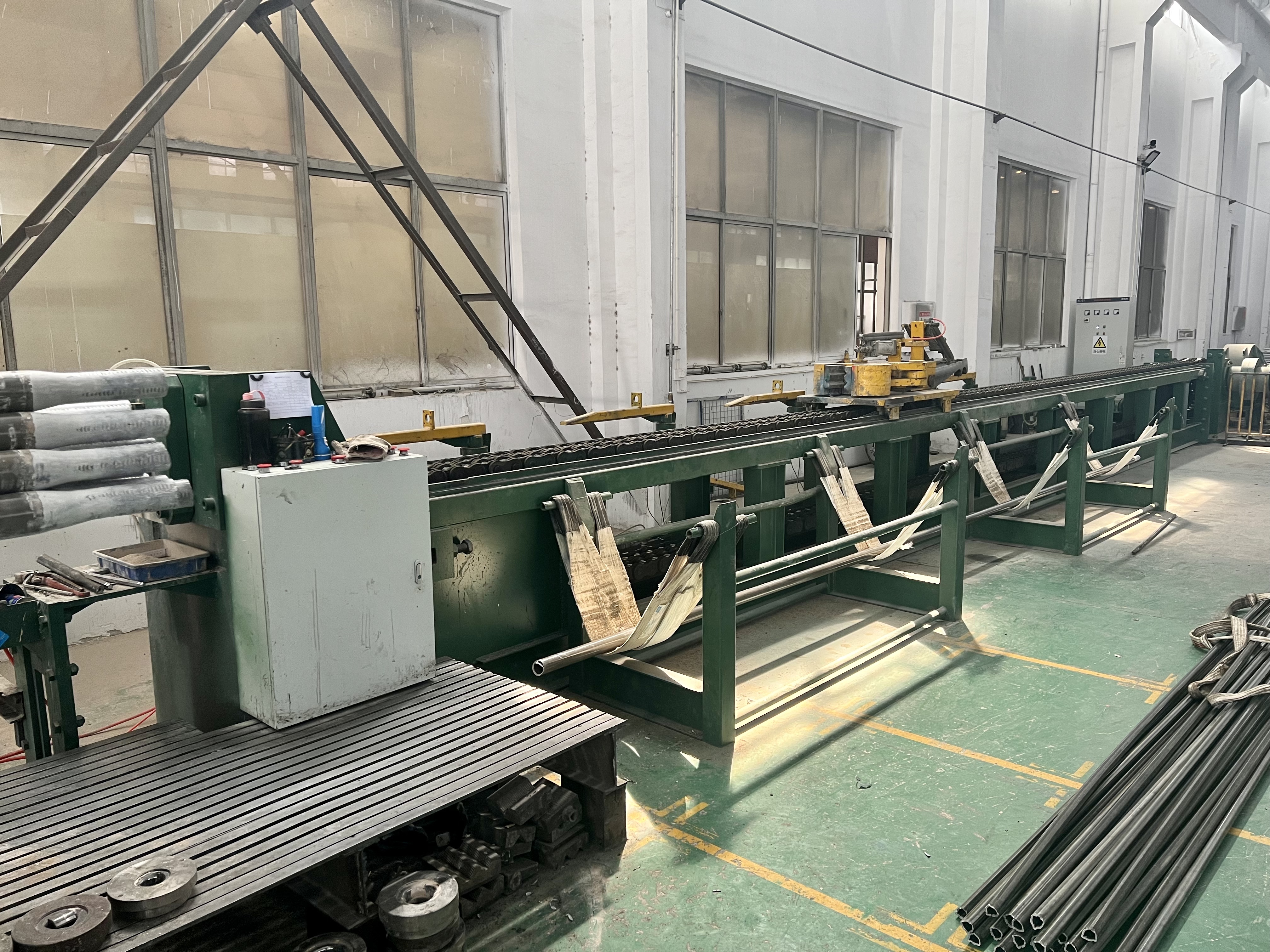
Capacity belongs in the same conversation when the order is large or repeated. The stated monthly capacity is 2,000 t, on a 20,000 m² production base, with roughly half of output exported and the main markets listed as the EU, Eurasia and MENA. Comparing a forecast annual requirement against a monthly figure is the simplest way to see whether an order is routine or needs scheduling.
Documented case, read in scope. An automotive parts manufacturer in Italy ordered 25 t of tube for an agricultural drive shaft application and has been supplied for two years. The recorded result is two years of stable supply with reduced secondary machining costs due to high-precision tolerances, and the recorded highlight is that the tube withstands high torque without deformation. That is one documented case in one application; it is not a performance guarantee for a different section, a different load or a different mating yoke.
Documentation is a separate field again. HS 7304 is the classification heading for seamless tubes, pipes and hollow profiles of iron or steel, so a hexagon or a lemon section does not change the heading on the customs paperwork. The commercial description and the drawing are two different documents and should be written to match each other.
8. Four specification lines, written out
The same six locks produce different lines depending on the assembly. The examples below use placeholder dimensions where only the drawing can supply a value.
Hydraulic fluid line
Cold drawn round tube, Q355B, outer diameter [OD] mm, wall [WT] mm, bore derived as OD minus twice the wall, ±0.1 mm on the outside diameter, cut to length, 100% tested, ISO quality management system statement. The wall is the number to argue over here, because it sets the flow area and the pressure-carrying section at the same time.
Hydraulic cylinder
Cold drawn round tube for hydraulic cylinders, Q355B, outer diameter [OD] mm, wall [WT] mm, ±0.1 mm on the outside diameter and on the bore, internal surface condition stated on the drawing. Where the cylinder is a pressure boundary, the application standard goes on its own line beside the grade.
Precision machined component
Cold drawn round tube or the precision steel pipe line (catalogued as model 7–100, same 1–100 mm outer diameter, 1–20 mm wall and ±0.1 mm limits), Q355B, finished size plus machining allowance, controlled dimension named. The closer the incoming tube sits to finished size, the less material the machining step removes — which is the mechanism behind the secondary-machining saving recorded in the Italian case.
Drive shaft
Shaped section matched to the yoke — external hexagonal internal round tube, internal hexagonal tube, lemon-shaped tube, triangle pipe, star pipe or square rectangular pipe — Q355B, section dimensions and point count stated, outer diameter 1–100 mm, wall 1–20 mm, ±0.1 mm on the mating feature, mating yoke or slip yoke reference on the drawing. For a factory line running 24/7, the special requirement to write down is resistance to deformation under torque, because that is what the application record names.
9. Where profile specifications usually break
Most specification failures are visible before the order is placed. These five are the recurring ones in shaped tube work.
- “Hexagon pipe” with no controlled surface. The catalogue holds both an external-hex and an internal-hex unit. Check: mark which surface is hexagonal on the drawing and in the RFQ text.
- A size without a controlled dimension. A ±0.1 mm band means nothing until it is attached to a feature. Check: one nominal, one band, one named feature per line.
- Grade used as a stand-in for a standard. Q355B answers “what material”, not “what service”. Check: separate lines for grade and for any application standard.
- A catalogue section assumed to fit a mating part designed for something else. Check: dimension the socket from the tube drawing, or send both drawings together and let the supplier confirm the pair.
- Quotes compared without matching the specification. Two quotations are only comparable when grade, outer diameter, wall thickness, tolerance and controlled feature are identical. Check: normalise the lines before comparing any commercial terms.
10. Frequently asked questions
What outer diameter, wall thickness and tolerance should appear on the drawing?
The catalogued limits for this Q355B profile range are 1–100 mm outer diameter, 1–20 mm wall thickness and ±0.1 mm tolerance. Put the exact nominal value and the ±0.1 mm band on the drawing, name the feature the band governs — outside diameter, across-flats or bore — and repeat all three on the purchase order so the model designation cannot replace the dimension line.
Which profile suits a hydraulic cylinder compared with a drive shaft?
A hydraulic cylinder works on a round section: the cold drawn round tube line is catalogued as tube for hydraulic cylinders and as hydraulic fluid line tubing, where the bore and the internal surface carry the duty. A drive shaft transmits torque through a non-circular form, so it needs a shaped section — external hex with a round bore, internal hex, lemon, triangle, star or square — matched to the yoke, hub or socket it engages. The application record for drive shaft tube lists a universal joint yoke, cross and bearing kit and slip yoke as the mating equipment.
Can a section that is not in the catalogue be produced?
Yes, through the custom special shaped pipe line, catalogued as model 2–100. Its described scope covers square, rectangular, oval and octagonal shaped steel pipe, PTO drive shaft tube, hexagonal special-shaped tube and non-standard special shaped pipe, and the company states that dimensions, lengths and logo are fully customizable under OEM, ODM or standard component supply. The section is then defined by your drawing rather than by a catalogue page.
What is the minimum order quantity and lead time?
The stated minimum order quantity is 1 t and the stated lead time is 30 days, against a stated monthly capacity of 2,000 t. For a new drawing-based section, confirm the schedule on the same RFQ, because a section that has to be reviewed before it can be scheduled is not the same order as a catalogue item.
How is the order verified before shipment?
The stated quality control method is 100% testing, within ISO quality management systems that the company states it strictly implements. Commercial cover is stated as a one-year warranty with 24-hour after-sales support and technical support. Customs description is a separate field: HS 7304 covers seamless tubes, pipes and hollow profiles of iron or steel, so the profile geometry does not change the heading.
How do I start a sample or quotation request?
Send the drawing or the specification line — function, section, grade, outer diameter, wall thickness, the controlled dimension with its ±0.1 mm band, length and quantity — and state which mating part the section engages. A quotation can then be issued against a defined section instead of a profile name, and a sample can be scheduled from the same document. Contact jiangjianfan@wxjiangbo.com or +86 13967785843.
11. Conclusion
Specifying a seamless steel pipe profile for agricultural machinery or automotive parts comes down to fixing the function first, then forcing the geometry, grade, size and tolerance to follow it. For the Q355B range from Fakesi, that means choosing among cold drawn round tube, external hexagonal internal round tube, external round internal hexagonal tube, lemon-shaped tube, triangle pipe, ST and 10ST star pipe and square rectangular pipe, or going to the drawing-based custom special shaped pipe route when the section is not catalogued — then locking outer diameter 1–100 mm, wall thickness 1–20 mm and a ±0.1 mm band onto a named feature.
Done in that order, the drawing, the quotation and the delivered tube describe the same part, and the comparison between suppliers becomes a comparison of like with like.

Working from a drawing? Send the section, the mating part and the dimensional line, and the quotation will be issued against a defined profile rather than a profile name. Wuxi Jiangbo Intelligent Technology Co., Ltd. (Fakesi) — wxjiangbo.com — jiangjianfan@wxjiangbo.com, +86 13967785843, No. 75, Xinda Rd., Fenshui Area, Zhoutie Town, Yixing, Wuxi, Jiangsu, China.
The full product brochure is available for download: Fakesi seamless steel pipe brochure (PDF).
Have Questions or Need More Details?
Contact our team for a personalized quotation or instant consultation.
Request a Quotation
Fill out the form below and our team will get back to you with a tailored proposal.
WhatsApp Direct Chat
Prefer to chat in real-time? Message us on WhatsApp for instant assistance & quick answers.
- Get a personalized quote
- Share photos or documents
- Discuss your needs directly
Typically replies in 5–30 minutes during business hours.