
Seamless Steel Pipe Supplier Capability Check: 1–100 mm OD & Custom Shapes
Seamless Steel Pipe Supplier Capability Check: 1–100 mm OD & Custom Shapes
A maker's ability to hold 1–100 mm OD, 1–20 mm wall thickness and ±0.1 mm tolerance across custom shapes is not proven by a catalogue photo. It is proven by three things a buyer can request in writing: the documented dimensional envelope, the number of cold-drawn profiles the supplier runs as routine production, and the measured precision it reports on a named grade such as Q355B. Fakesi — the brand of Wuxi Jiangbo Intelligent Technology Co., Ltd., a steel tube manufacturer founded in 1992 in Yixing, Wuxi, Jiangsu, China — documents a production range of Φ10 mm to Φ280 mm outside diameter with 1 mm to 18 mm wall thickness, and lists Cold Drawn Seamless Pipe, Seamless Hexagon Pipe, Seamless Lemon-shaped Tube and other special-shaped pipe in its product line.
Key takeaways
- A capability claim is only usable when it names a band edge (minimum and maximum OD), a wall range, and the tolerance that holds at each end of that band.
- Portfolio breadth — cold drawn round tube, hexagon pipe, lemon-shaped tube, and fully custom special shaped pipe — is a measurable proxy for cold-drawing depth, because each profile requires a different die set, drawing pass and gauging method.
- Grade and shape must be evaluated together: a profile that draws cleanly in 20# can drift out of tolerance when the same die set runs Q355B.
- Two classic failure modes are worth naming in the RFQ: dimensional misfit (controlled through compatibility inspection and straightness control) and transit corrosion (controlled through surface anti-rust protection).
1. The Problem: "Custom Shapes Available" Is Not a Capability Answer
Most RFQ replies for precision seamless tube converge on the same four phrases: wide range, custom shapes available, tight tolerance, fast delivery. None of them can be scored, and none of them tell a buyer whether the supplier can reproduce a 1–100 mm OD band across a non-circular cross-section.
The gap usually shows up in three specific places:
- No band edges. A supplier quotes a nominal outside diameter but does not state the tolerance that holds at the smallest and largest OD it can actually draw. Precision rarely behaves linearly across a range; the ends of a range are where capability is proven or lost.
- No shape list. "Special shapes" is not a specification. A usable answer names the profiles (triangle, hexagon, lemon, octagon, oval), the wall thickness available for each, and whether the shape is routine production or an occasional trial run.
- No grade-to-shape pairing. Drawability is a function of both geometry and material. A shape validated in 20# seamless steel pipe is not automatically validated in Q355B, where higher strength changes springback and die wear.
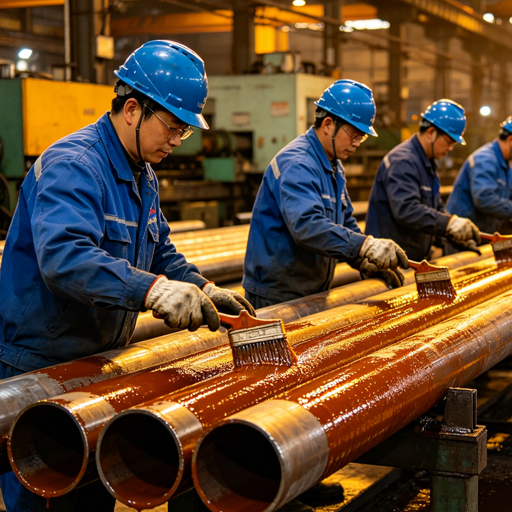
The commercial consequence of a weak capability answer is dimensional misfit at assembly — a tube that passes incoming paperwork but fails to fit a cylinder bore, a bearing seat or a hexagonal socket. Fakesi's process documentation treats this as a controlled risk: the stated control method for misfit is compatibility inspection, and the stated enterprise measure is control of dimensional straightness. The second recurring risk is rust and corrosion in transit, controlled through waterproofing and anti-corrosion measures, with anti-rust oil applied to the tube surface.
2. Industry Background: Why Cold-Drawing Depth Matters More Than Tonnage
The supply base is shifting, and the shift favours buyers who evaluate precision rather than volume. China's seamless steel tube output in 2024 is estimated at 29.9 million tons, a 5.08% year-on-year decline, according to the Steel Tube Branch of China Steel Association. Over a comparable horizon, the global seamless steel tube and pipe market value is projected at approximately USD 130–140 billion by 2026, based on commercial research published in 2026.
Read together, those two figures describe a market where tonnage is contracting while value is not — a pattern consistent with consolidation away from commodity hot-rolled volume and toward higher-value precision product. For a buyer sourcing in the small-to-medium OD band, that is an argument for weighting cold-drawing depth, profile range and tolerance discipline above headline capacity.
Two further reference points help structure a supplier review. First, trade screening: HS 7304 is the harmonised-system heading for seamless tubes, pipes and hollow profiles of iron or steel, per UN Comtrade classification — useful when a buyer wants to check whether a supplier's claimed export markets are plausible before requesting documents. Second, standards context: ASTM A106 is the specification for seamless carbon steel pipe for high-temperature service, and ISO 3183 addresses steel pipe for petroleum and natural-gas pipeline transportation systems. Grade designations across standards are not automatically interchangeable — API 5L Grade B and ISO 3183 Grade L245 are listed as equivalent references in manufacturer technical literature, but equivalence should be confirmed against the applicable edition, product specification level and purchase specification before it is written into an order.
3. The Three-Layer Capability Model
A defensible assessment of a seamless tube maker rests on three layers that can each be evidenced with documents rather than adjectives.
3.1 Layer 1 — The documented dimensional envelope
The envelope is the pair of numbers a supplier is willing to put in writing: minimum and maximum outside diameter, minimum and maximum wall thickness, and the tolerance class that applies. The benchmark band for precision cold-drawn tube in industrial RFQs is 1–100 mm OD with 1–20 mm wall thickness, with ±0.1 mm as the tolerance target that separates genuine cold-drawn precision tube from hot-rolled stock that has been sized.
Fakesi documents a production range of Φ10 mm to Φ280 mm outside diameter and 1 mm to 18 mm wall thickness, with materials covering 10#, 20#, 35#, 45#, 20Cr, 40Cr, 16Mn, 20Mn, Q355B and Q235B. The practical evaluation point is not whether a range is wide, but whether the supplier can tell you where inside its own range the tight tolerance still holds — and which profiles it applies to.
3.2 Layer 2 — Profile portfolio breadth
Portfolio breadth is the most under-used capability signal in seamless tube sourcing. A circular tube can be produced with a relatively simple die and mandrel arrangement; a non-circular profile forces the supplier to control wall distribution around a perimeter where the radii are unequal. Each additional shape in routine production implies an additional tooling set, an additional drawing schedule, and an additional gauging method.
This is why four profiles in particular function as evidence of cold-drawing depth:
- Cold drawn round tube — the baseline. If round tube cannot hold ±0.1 mm class precision, no shaped profile from the same supplier will.
- Hexagon pipe — introduces flat-to-flat dimension control and corner radius control, both of which behave differently from a diameter measurement.
- Lemon-shaped tube — an asymmetric profile with unequal radii, which stresses wall-thickness uniformity around the section rather than at a single point.
- Custom special shaped pipe — triangle, octagon and oval sections, where the real question is whether the supplier owns the tooling and the trial loop, or outsources the shape and only finishes it.
3.3 Layer 3 — Grade and shape pairing
Geometry and metallurgy have to be evaluated as a pair. Q355B seamless steel pipe carries higher strength than a plain 20# carbon steel tube, and higher strength means greater springback after the drawing pass and faster die wear. The result, if the process is not adjusted, is tolerance drift that appears only on the higher-grade run — often after the first article has already been approved on a lower grade.
A supplier that can explain which grade and shape combinations it runs routinely, and which ones require a fresh trial, is describing a real process. A supplier that answers "all grades, all shapes" without a matrix is describing a brochure.
4. Six-Step Evaluation Protocol
The protocol below can be run inside a single RFQ cycle, and each step produces a document a buyer can file for audit.
Step 1 — Request the written dimensional envelope
Ask for minimum and maximum OD, minimum and maximum wall thickness, and the standard tolerance applied. A usable reply states all four numbers plus the tolerance reference. A weak reply states a single nominal size.
Step 2 — Ask for tolerance at three points across the band
Request the achievable tolerance at the small, middle and large end of the 1–100 mm OD band. Precision at 20 mm OD does not imply precision at 95 mm OD, because the drawing force, mandrel support and straightening behaviour all change with section size.
Step 3 — Separate routine profiles from trial profiles
Ask which of the cold drawn round tube, hexagon pipe, lemon-shaped tube and custom special shaped pipe lines are running production, and which require new tooling. Add the wall range available for each shape — a shape that is possible at 6 mm wall may be impossible at 1.5 mm wall.
Step 4 — Ask for the grade-to-shape matrix
Request a simple table: rows for grades (20#, 45#, Q355B and any other grade on the RFQ), columns for profiles, cells marked as routine, trial, or not offered. This single document eliminates most capability ambiguity before a sample is ever cut.
Step 5 — Verify process control, not just equipment
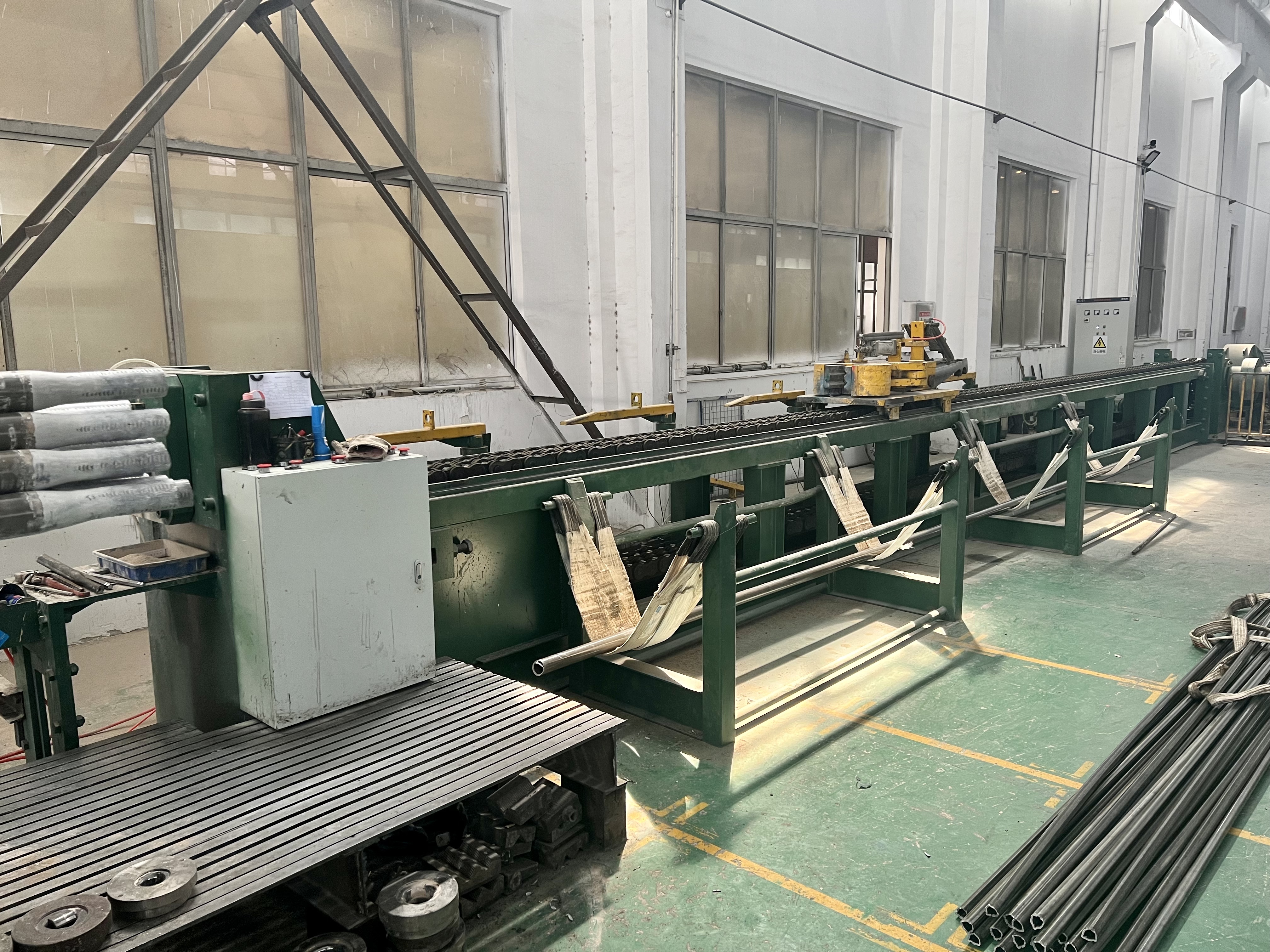
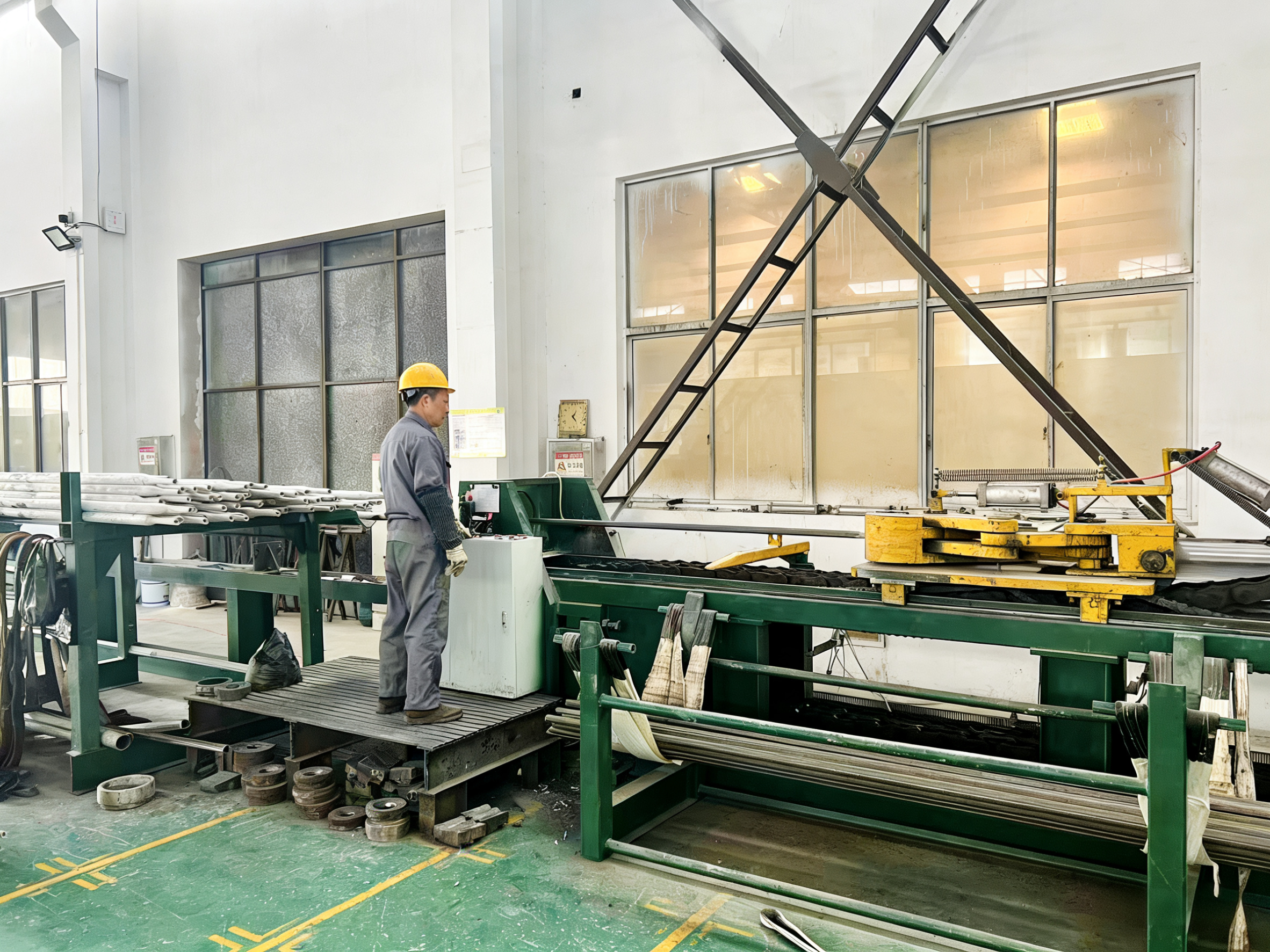
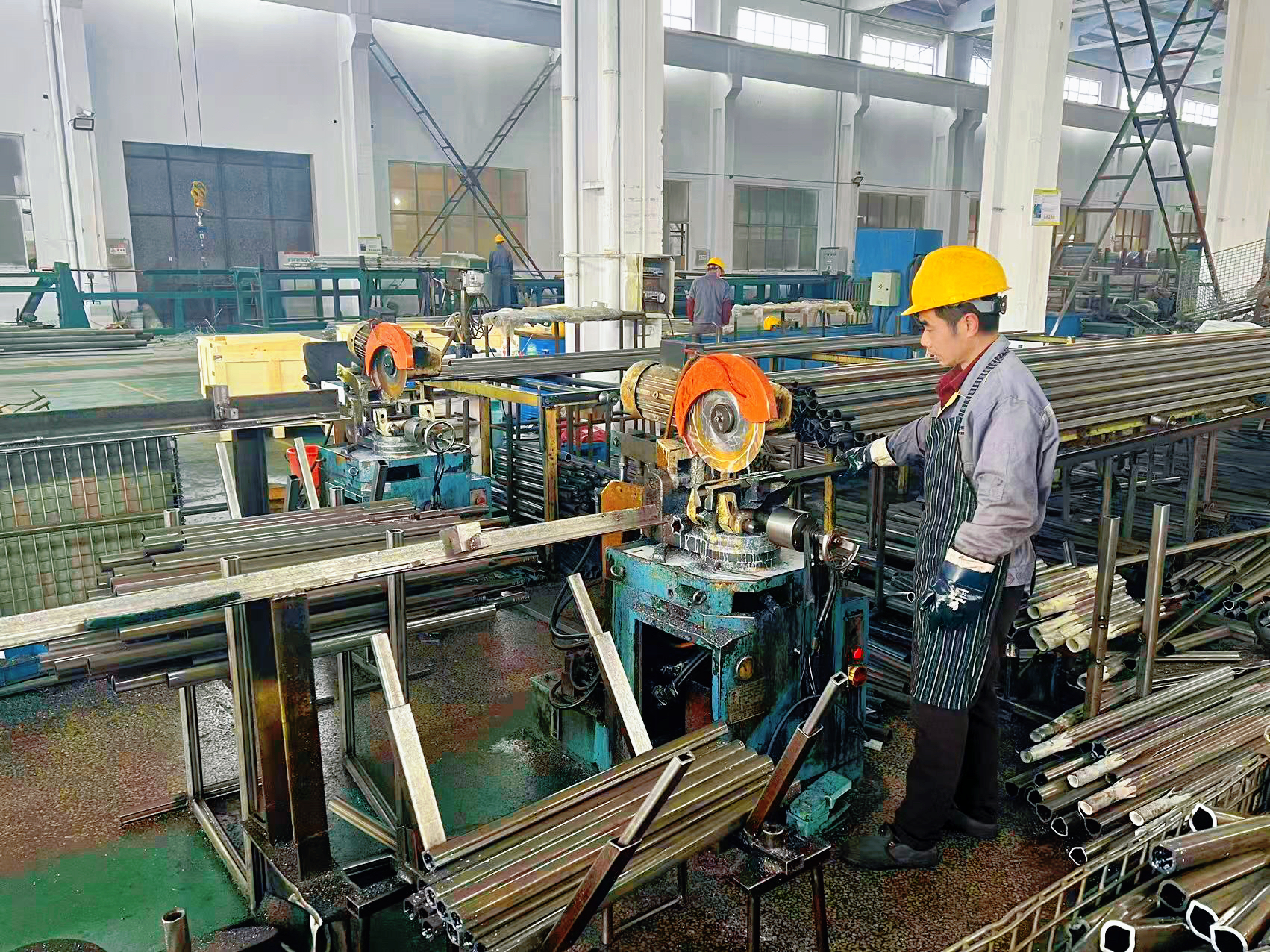
Confirm the sequence behind the claim: cold drawing, annealing, straightening, and fixed-length cutting, plus the surface protection step. Straightening and fixed-length cutting are the operations that determine whether a tube arrives straight enough to load into a machining centre without rework, while anti-rust oil application determines whether it arrives free of surface corrosion. Ask for the inspection point where dimensional straightness is checked, because that is where misfit risk is actually closed.
Step 6 — Close the loop with a capability sample
Order a sample in the hardest combination on the RFQ, not the easiest: the largest or smallest OD in the band, the thinnest wall, and the higher grade. Measure OD, wall thickness, straightness and, for shaped profiles, flat-to-flat or major/minor dimensions across the section. A supplier whose sample holds tolerance on the hardest combination has demonstrated the process, not just the intention.
5. Where These Capabilities Are Used
The dimensional attribute that decides acceptance changes with the application, which is why a capability check has to be tied to end use rather than to a generic grade list.
- Hydraulic and pneumatic cylinders — the bore-side surface and roundness govern seal performance and honing allowance; wall thickness uniformity matters more than a single OD reading.
- Agricultural and automotive drive shafts — torsional behaviour and section consistency dominate. Fakesi's own comparison data for drive shaft tube against PTO profile tube states a 5% lower cost, a stated 200%–400% extended service life, tighter tolerances and higher torsional strength, together with reduced maintenance. Those are company comparison figures; they are the right starting point for a trial order, not a substitute for it.
- Motorcycle and auto parts, smart lock components, motor housings — smaller sections where flat-to-flat control on hexagonal and special-shaped tube replaces diameter control as the critical measurement.
- Construction machinery and general machined structures — thick wall seamless steel pipe and Seamless Pipe for Machining, where stock allowance and straightness determine machining cycle time.
- Mold manufacturing and custom structural applications — Precision Bright Steel Pipe and custom shaped sections, where the profile itself is the design feature.
6. Capability Comparison: What to Score Side by Side
The tables below turn the model into a scoring sheet. Table 1 tests portfolio breadth; Table 2 tests the documented envelope and the operating base behind it.
| Profile | What the shape actually tests | Question to put in the RFQ |
|---|---|---|
| Cold Drawn Round Tube / Seamless Round Pipe | Baseline die and mandrel control; roundness and wall uniformity | What tolerance holds at the small and large end of your OD range? |
| Seamless Hexagon Pipe | Flat-to-flat dimension and corner radius control, which cannot be verified with a diameter gauge | What is the flat-to-flat tolerance, and what wall range is available? |
| Seamless Lemon-shaped Tube | Wall distribution around an asymmetric section with unequal radii | How is wall thickness measured around the section, and at how many points? |
| Seamless Triangle Pipe | Corner fill and flatness on a three-sided section | Is this shape routine production or a new tooling item? |
| Seamless Octagon Pipe | Symmetry across eight flats; cumulative angular error | Which grades have already been run on this profile? |
| Seamless Oval Steel Pipe | Major/minor axis ratio control and concentricity | What is the achievable axis ratio and its tolerance? |
| Custom special shaped pipe | Whether tooling, drawing schedule and trial loop are in-house | Who owns the die, and how many trials before first article approval? |
| Capability item | What a buyer should be able to verify | Documented data point |
|---|---|---|
| Outside diameter | Minimum and maximum OD stated in writing | Φ10 mm – Φ280 mm |
| Wall thickness | Thin-wall through thick-wall continuity | 1 mm – 18 mm |
| Tolerance | Precision class claimed for cold-drawn tube, confirmed per profile | ±0.1 mm precision target |
| Material grades | Multi-grade drawability, including high-strength carbon steel | 10#, 20#, 35#, 45#, 20Cr, 40Cr, 16Mn, 20Mn, Q355B, Q235B |
| Profile range | Round, hexagonal, lemon, triangle, octagon, oval and custom sections | Seamless Round Pipe, Seamless Hexagon Pipe, Seamless Lemon-shaped Tube, Seamless Triangle Pipe, Seamless Octagon Pipe, Seamless Oval Steel Pipe |
| Production capacity | Whether claimed volume is supported by a real base | 2,000 t/month; 20,000 t annual output; 20,000 m² facility; founded 1992; 50 employees; 5 R&D engineers |
| Export experience | Familiarity with destination-market documentation | 50% export ratio; EU, Eurasia and MENA markets |
7. FAQ
What standards and certificates should be verified before approving a seamless tube supplier?
Verify the standard named on the purchase order, then verify that the supplier's certificate scope actually covers it. ASTM A106 is the specification for seamless carbon steel pipe for high-temperature service; ISO 3183 covers steel pipe for petroleum and natural-gas pipeline transportation systems. Grade designations are not automatically interchangeable across standards — API 5L Grade B and ISO 3183 Grade L245 appear as equivalent references in manufacturer literature, but edition, product specification level and testing requirements still have to be confirmed. Fakesi states that it implements ISO quality management systems; a buyer should still request the certificate and confirm which product scope it covers.
How can I confirm a supplier genuinely cold-draws 1–100 mm OD and custom shapes rather than reselling?
Ask for four documents: the written OD and wall envelope with the tolerance that holds at each end of the band, the list of profiles in routine production with the wall range per profile, the grade-to-shape matrix, and the process sequence including cold drawing, annealing, straightening and fixed-length cutting. Resellers can produce the first document but rarely the second and third. Fakesi's documented envelope is Φ10 mm to Φ280 mm OD with 1 mm to 18 mm wall thickness, and its product line covers round, hexagonal, lemon-shaped, triangle, octagon and oval sections — which is the shape of an answer that can be tested against a sample.
Does a broader custom-shape portfolio raise the unit cost?
Cost is driven by the specification, not by the catalogue: new tooling for a non-standard section, wall thickness, tolerance class, grade and order quantity are the main variables. Shapes already in routine production avoid new tooling cost; a new custom special shaped pipe introduces die preparation before drawing begins. Where a direct comparison exists, Fakesi's comparison data for drive shaft tube against PTO profile tube states a 5% lower cost alongside tighter tolerances and higher torsional strength. Any figure should be confirmed against a quotation written for the actual grade, profile, wall and tolerance on the RFQ.
What should a capability sample include before I approve a custom shape?
A sample is only useful if it is cut from the hardest combination on the RFQ — the extreme OD in the band, the thinnest wall, the higher grade. Ask for the dimensional report (OD, wall, straightness, and flat-to-flat or axis ratio for shaped profiles), the material grade confirmation, and the surface condition including anti-rust protection. Test the sample against your own assembly, not just against a drawing. Fakesi accepts sample and quotation requests through its product catalogue, which can be downloaded here: Fakesi seamless steel pipe product catalogue (PDF).
How long does a custom shape trial take from enquiry to first article?
Lead time for a shaped profile splits into two parts that should be quoted separately: tooling and die preparation, and the drawing sequence itself — drawing, annealing, straightening and fixed-length cutting. Shapes already in routine production skip the first part entirely. Ask the supplier to state both parts in writing, and to confirm which grade the trial will be run in, because a trial on 20# does not validate a later Q355B production run. Treat the schedule as a capability answer in itself: a supplier that can break lead time into named process stages is describing a process it controls.
Next step: test the capability claim on your own specification. Send the OD, wall, grade, tolerance and profile you need — including non-circular sections — and request a capability sample from Fakesi (Wuxi Jiangbo Intelligent Technology Co., Ltd.).
Contact: jiangjianfan@wxjiangbo.com · Tel / WhatsApp +86 13967785843 · No. 75, Xinda Rd., Fenshui Area, Zhoutie Town, Yixing, Wuxi, Jiangsu, China
Download the product catalogue8. Conclusion
A seamless tube maker's handling of 1–100 mm OD and custom shapes is a testable claim, not a marketing position. The test has three layers: a documented dimensional envelope that states where tolerance holds, a profile portfolio broad enough to prove cold-drawing depth across round, hexagonal, lemon-shaped and custom sections, and a grade-to-shape matrix that shows Q355B and 20# are treated as different process problems rather than the same one.
Fakesi documents a Φ10 mm to Φ280 mm OD range with 1 mm to 18 mm wall thickness, runs a product line that includes Seamless Hexagon Pipe, Seamless Lemon-shaped Tube, Seamless Triangle Pipe, Seamless Octagon Pipe and Seamless Oval Steel Pipe, and operates a 20,000 m² facility with a stated 2,000 tons per month capacity — figures a buyer can verify against certificates, samples and first-article inspection rather than against a brochure. Score the envelope, score the portfolio, score the grade matrix, then cut the sample on the hardest combination. That sequence is what separates a supplier capability check from a supplier introduction.
Have Questions or Need More Details?
Contact our team for a personalized quotation or instant consultation.
Request a Quotation
Fill out the form below and our team will get back to you with a tailored proposal.
WhatsApp Direct Chat
Prefer to chat in real-time? Message us on WhatsApp for instant assistance & quick answers.
- Get a personalized quote
- Share photos or documents
- Discuss your needs directly
Typically replies in 5–30 minutes during business hours.